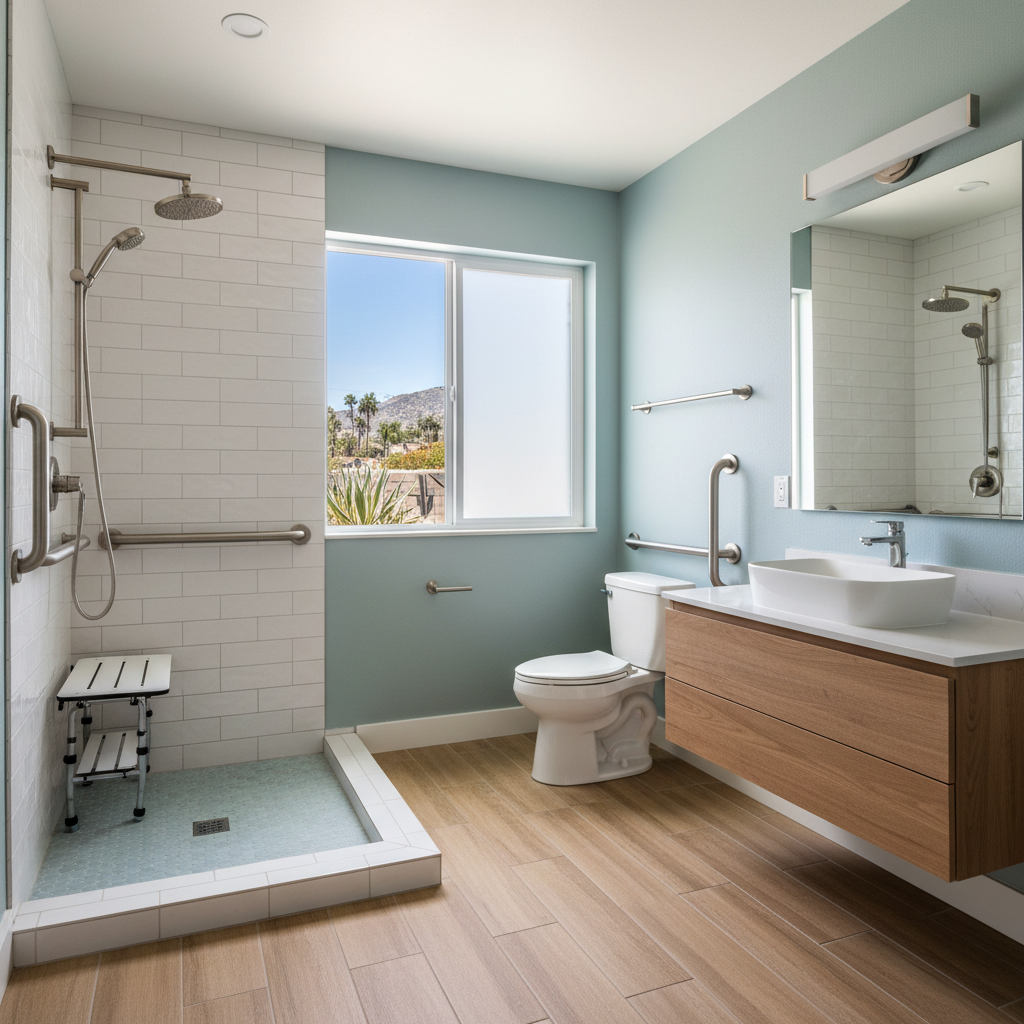
Planning a handicap accessible bathroom remodel? That's a smart move. Whether it's for yourself, an aging parent, or just future-proofing your home, making a bathroom truly accessible isn't just about throwing in a grab bar. It's about thoughtful design and practical execution. But I've seen a lot of folks in Fountain Valley make some pretty common mistakes that end up costing them time, money, and a whole lot of frustration. Let's talk about what to watch out for.
Mistake #1: Not Thinking Beyond the Immediate Need
This is probably the biggest one. You might be thinking, "Okay, I need a grab bar here, and maybe a shower seat." That's a start, but it's often not enough. True accessibility means considering the entire user experience. Can a wheelchair turn around comfortably? Is the toilet height right for transferring? Can someone easily reach the faucet handles without straining? I've seen people install a beautiful roll-in shower, only to realize the doorway into the bathroom is too narrow for a walker or wheelchair. Or they put in a fancy new vanity that looks great, but the sink is too deep for someone in a chair to get their knees underneath. You've got to think about the flow, the turning radius, and how someone will actually use every single element in that room. It's not just about meeting a code; it's about making life easier.
Mistake #2: Skimping on Professional Design and Planning
I get it, everyone wants to save a buck. But trying to DIY the design of an accessible bathroom, or just letting a general contractor who doesn't specialize in this kind of work wing it, is a recipe for regret. Accessible design isn't just standard construction. There are specific dimensions, clearances, and product considerations that make a huge difference. For example, if you're in one of those older Fountain Valley homes built in the 60s or 70s, you might have some tight spaces. Just widening a doorway isn't always as simple as it sounds; sometimes you're dealing with load-bearing walls or existing plumbing that needs to be relocated. A good designer or a contractor who really knows accessible remodels, like us at Fountain Valley Custom Bathrooms, will catch these things upfront. We'll measure, sketch, and talk through every scenario before a single hammer swings. This prevents costly changes mid-project.
Mistake #3: Picking the Wrong Products (or Not Knowing What's Available)
There's a huge world of accessible products out there, and not all of them are created equal. Some homeowners just pick the first grab bar they see or a standard toilet, thinking it'll do the trick. But have you considered a comfort-height toilet that's easier to get on and off? What about lever-style faucet handles instead of knobs, which are much easier for someone with arthritis? Or a handheld showerhead that can be adjusted for seated bathing? Even the flooring matters. You want something non-slip, even when wet. Textured ceramic tiles are often a good choice, but you need to make sure the grout lines aren't too wide or deep, which can catch wheels. I've seen people install slick, high-gloss tiles that look beautiful but become a serious fall hazard once they're wet. You need to balance aesthetics with absolute safety and functionality. Don't just browse the big box store; talk to someone who knows the best options for long-term use and durability.
Mistake #4: Ignoring Proper Installation and Structural Support
This one's critical, especially for grab bars and shower seats. A grab bar isn't just screwed into drywall. It needs to be anchored directly into wall studs or have proper blocking installed behind the wall to support significant weight. I've seen grab bars pull right out of the wall because they weren't installed correctly. That's not just an inconvenience; it's a serious injury waiting to happen. Same goes for wall-mounted sinks or fold-down shower seats. You need to be absolutely sure the underlying structure can handle the load. This is where an experienced contractor really earns their keep. We know how to open up walls, install the necessary blocking, and ensure everything is rock-solid and safe. You can't compromise on structural integrity in an accessible bathroom.
Mistake #5: Forgetting About Lighting and Contrast
It might seem minor, but good lighting is paramount in an accessible bathroom. As we age, our vision changes, and shadows can create trip hazards or make it hard to distinguish between surfaces. You want bright, even lighting throughout the bathroom, especially in the shower and around the toilet. Consider task lighting around the vanity mirror. Also, think about color contrast. If your toilet seat is the exact same color as your toilet, it can be harder for someone with impaired vision to see where one ends and the other begins. A contrasting toilet seat, or even contrasting floor and wall tiles, can make a big difference in spatial awareness and safety. These are the little details that separate a good accessible remodel from a truly great one.
Look, an accessible bathroom isn't just a project; it's an investment in comfort, safety, and independence. Don't rush into it without doing your homework and, more importantly, without bringing in professionals who understand the nuances. You want a bathroom that serves its purpose beautifully and safely for years to come, not one you'll regret a few months down the line.